No products in the cart

Understanding and Recognizing Workplace Violence in Faith-Based Organizations
A Faith-Based Perspective on Preventing Workplace Violence...

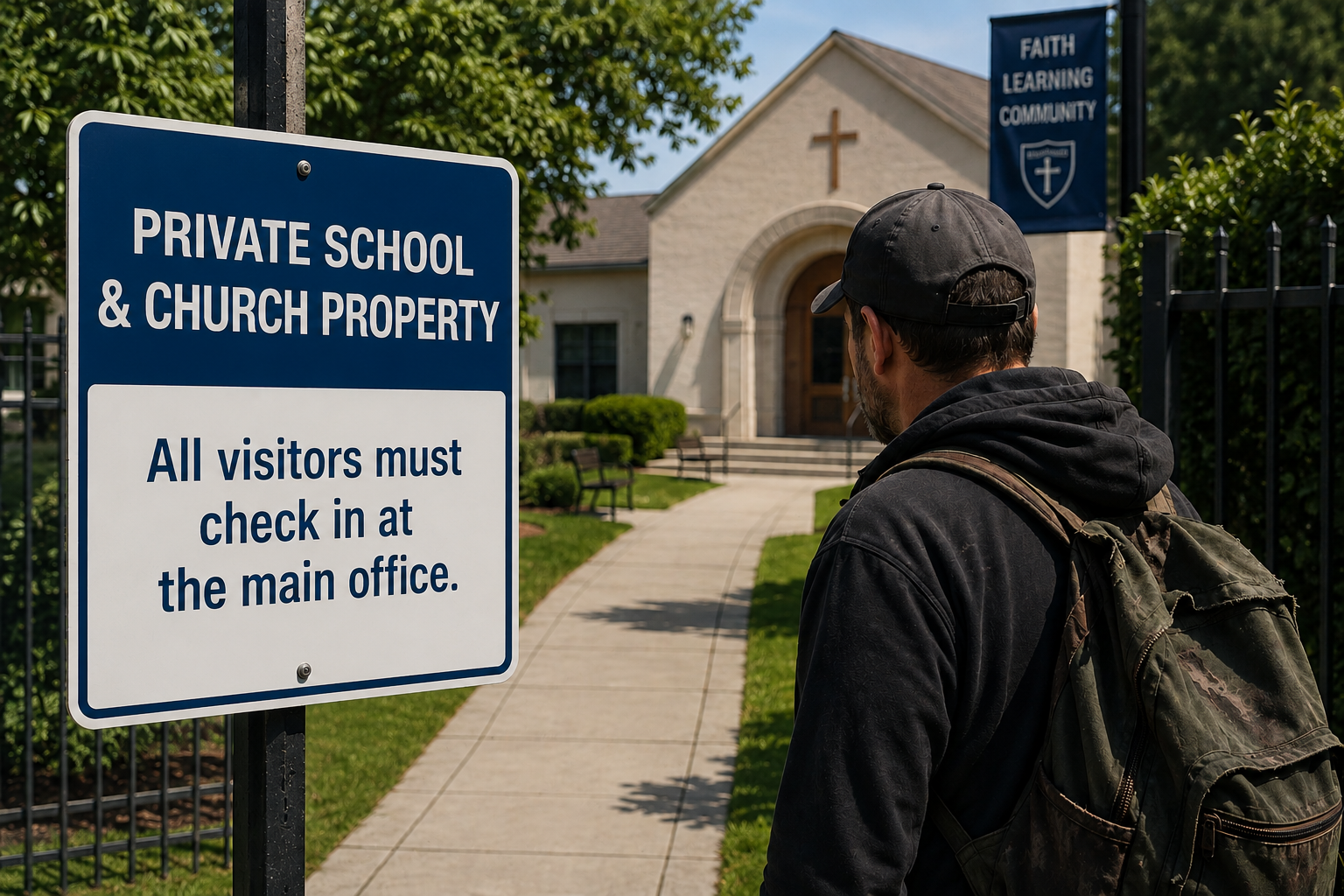
Imagine you are the administrator of a private religious school. You learn that a person required to register as a sex offender pursuant to California Penal Code § 290 intends to come onto your school campus.
The reason could vary. The individual may be the parent of an enrolled student. They may wish to attend a graduation ceremony, school play, athletic event, or parent-teacher conference. They may even be a contractor employed by a company hired to perform work on the campus.
Regardless of the reason, these situations present difficult legal and practical questions. School administrators have a duty to protect the children entrusted to their care while ensuring California’s sex offender laws are correctly understood and consistently applied.
Understanding when registered sex offenders may legally enter California school campuses is essential for administrators of private religious schools, pastors, HR leaders, and governing boards. Knowing the law and having clear internal procedures helps ministries protect children while making legally sound decisions.
One area that frequently causes confusion is whether a school remains legally a “school” when classes are no longer in session. Administrators commonly ask:
The answer begins with California’s definition of a school.
Penal Code § 626.8 defines a “school” as any preschool or public or private school having kindergarten or any of grades 1 through 12, inclusive. Nothing in the statute limits that definition to school hours. A school remains a school 24 hours a day, seven days a week, whether or not instruction is taking place.
This matters because Penal Code § 626.81 regulates access to school buildings and school grounds, not merely classroom instruction.
Under Penal Code § 626.81, a person required to register under Penal Code § 290 commits a misdemeanor by entering school buildings or school grounds unless both of the following conditions are met:
Because a school remains a school after hours, the statute continues to apply during evening events, weekends, holidays, and summer activities held on school grounds.
Accordingly, a parent who is required to register as a sex offender is not automatically prohibited from entering campus. However, they generally may do so only when they have lawful business and have received advance written permission from the school’s chief administrative official.
Likewise, attendance at after-hours activities—including athletic events, concerts, school plays, graduation ceremonies, and parent-teacher conferences—does not eliminate these statutory requirements simply because the event occurs outside normal school hours.
Every situation should be evaluated on its own facts. Administrators should avoid making assumptions based solely on a person’s appearance on a sex offender registry. The individual’s legal status, the purpose of the visit, and the surrounding circumstances should all be considered before deciding. This same legal analysis may also apply when a registered sex offender is expected to enter campus as a contractor, vendor, or service provider, making it important to carefully evaluate the specific facts, applicable laws, and potential safety risks before granting access.
In addition to complying with California law, private religious schools should consider implementing consistent internal procedures when requests for campus access arise. Best practices include:
Schools should also make sure their policies align with broader child safety initiatives, including requirements under California’s AB 506 and other applicable ministry safety standards. For additional guidance, see CHRN’s article on AB 506 and Your Ministry: Navigating Compliance and Protecting Your Organization.
California law establishes minimum legal requirements, not necessarily an organization’s entire risk-management strategy. While faith-based organizations are often called to extend grace, compassion, and opportunities for restoration, they also have a legal and moral duty to protect the children entrusted to their care. Those responsibilities are not mutually exclusive, but they do require thoughtful policies and careful, case-by-case evaluation.
In many cases, individuals who have committed serious offenses continue to face legal and practical consequences long after completing their sentences. While a ministry may sincerely desire to extend grace and provide opportunities for worship and spiritual growth, that does not necessarily mean the individual can safely participate in every ministry activity or be granted unrestricted access to every ministry environment. Protecting children and other vulnerable persons must remain the overriding priority.
In some circumstances, a ministry may conclude that a registrant can safely attend a school function under carefully defined conditions. In others, the nature of the offense, the layout of the campus, the ages of the children present, or other risk factors may warrant additional safeguards or, where legally permissible, denial of permission. There is no one-size-fits-all solution.
Organizations should also ensure their child safety procedures are supported by current policies, employee training, and volunteer screening processes. Resources such as CHRN’s Protecting Children in Ministry: Recognizing and Preventing Grooming Behaviors and Mandated Reporter and Volunteer Training can help ministries strengthen their overall protection strategy.
Resources and Support for Private Religious Schools
California’s Megan’s Law Website and the Dru Sjodin National Sex Offender Public Website provide searchable sex offender registry information for California and all 50 states, the District of Columbia, U.S. territories, and many federally recognized tribal jurisdictions.
If your school encounters a situation involving a registered sex offender on campus, Church HR Network can help evaluate the applicable legal requirements, assist with developing an appropriate response, and provide practical guidance to help your ministry balance child safety, legal compliance, and risk management. If there is an immediate safety concern or a suspected violation of the law, contact your local law enforcement agency.
Potentially, yes. Under California Penal Code § 626.81, a registered sex offender may be permitted to enter school grounds if they have lawful business at the school and receive written permission from the school’s chief administrative official. Additional notification requirements may also apply depending on the circumstances.
Yes. California law defines a school based on the property itself, not whether classes are in session. The requirements for registered sex offenders entering school grounds generally apply during evenings, weekends, holidays, and summer activities as well. Schools should also periodically review their church safety and security policies to ensure they remain effective and up to date.
Every request should be evaluated individually based on the person’s legal status, the purpose of the visit, campus conditions, and any applicable legal requirements. Schools should also maintain written documentation of approvals and follow their established child protection policies. Incorporating these procedures into employee handbooks for ministries can help ensure consistency among administrators and staff.
A comprehensive child safety program should include clear policies, employee and volunteer screening, mandated reporter training, ongoing staff education, and regular policy reviews to help reduce risk and protect children. Providing mandated reporter and volunteer training is an important step toward creating a safer ministry environment.
Schools should regularly review their policies and procedures to ensure they comply with current California laws, including AB 506 and other applicable regulations governing youth-serving organizations. For additional guidance, read AB 506 and Your Ministry: Navigating Compliance and Protecting Your Organization.
Yes. Church HR Network assists churches and private religious schools with child safety policies, HR compliance, employee handbooks, training, risk management, and other ministry-specific employment matters. Organizations seeking ongoing support can learn more about HR Subscription Services to receive practical guidance tailored to the unique needs of churches, ministries, and private religious schools.
A Faith-Based Perspective on Preventing Workplace Violence...

The Family Preparedness Act of 2025: New Emergency and Safety...

An Overview of California SB 848 Requirements for Private...