No products in the cart

HIPAA Fundamentals for Churches and Religious Schools
Most churches and Christian schools want to protect the privacy...

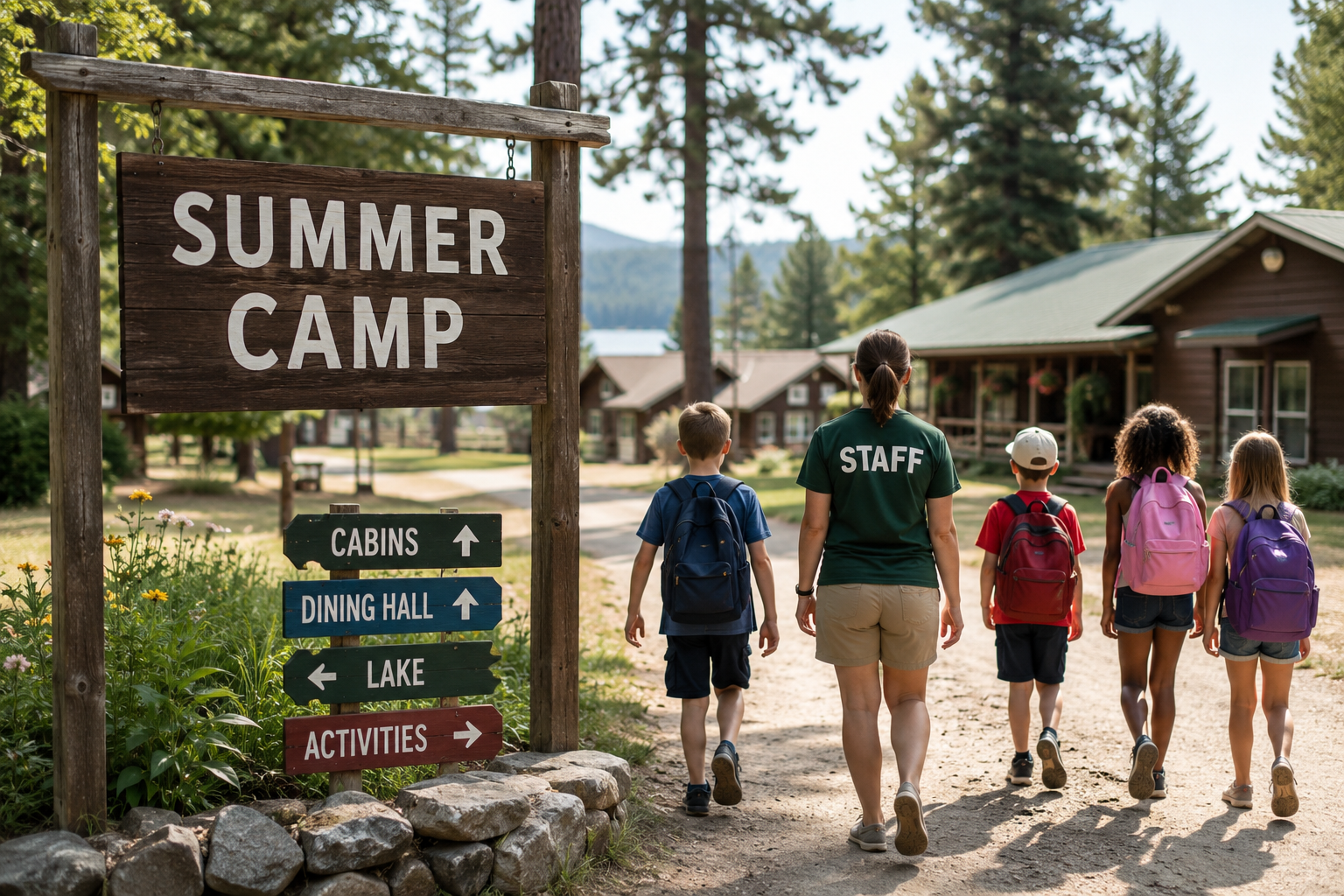
California Industrial Welfare Commission Wage Order No. 5-2001 governs employees in the public housekeeping industry, including camps and similar facilities. (IWC Wage Order No. 5-2001, § 2(P) § (3). Covered establishments include:
Under Wage Order 5, employees are generally entitled to:
However, California Labor Code § 1182.4 establishes a specific exception for certain employees of nonprofit organized camps.
California Labor Code § 1182.4 allows qualifying nonprofit camps to compensate certain employees under a modified wage structure.
This provision applies when the camp:
The statute recognizes the unique structure of camps and allows alternative pay practices for certain camp program staff.
The wage exception generally applies to staff directly responsible for the camp program and supervision of campers, including:
(Lab. Code § 1182.4(a)).
These employees typically perform duties such as:
Employees who primarily perform operational roles such as food service, maintenance, housekeeping, or administrative support generally do not qualify for the exemption and must be paid according to standard minimum wage and overtime rules under Wage Order 5.
California Labor Code § 1182.4(a) allows certain nonprofit camps to compensate qualifying camp employees at 85 percent of the state minimum wage. Under this provision:
As a result:
This structure recognizes that camp counselors and program staff often work irregular schedules that include evening activities, supervision duties, and overnight responsibilities.
Many camps provide employees with meals and on-site lodging during the camp season. California law permits employers to credit the value of meals and lodging against wages under certain conditions.
These rules are governed by:
Written Authorization Required – 85% Rule
The employer may deduct the value of meals or lodging only if the employee voluntarily agrees in writing. (Lab. Code § 1182.8; Wage Order 5 § 10(C)).
The written agreement should clearly state:
Deductions Must Reflect Fair Value
The deduction must reflect the actual or fair value of the meals or lodging provided, and it must comply with the maximum meal and lodging credit amounts established under California law. (Wage Order 5 § 10(C); Lab. Code § 1182.8).
Employers should avoid arbitrary deductions and instead ensure that any deduction is reasonable and properly documented.
Meals and Lodging Must Be Voluntary
Meals and lodging must be voluntarily accepted by the employee for the credit to apply.
(Wage Order 5 § 10(A)).
If the employee is required to live on-site as a condition of employment, the employer should carefully review the wage and hour implications, as additional rules may apply.
Additional Compliance Considerations
Even when camps utilize the Labor Code § 1182.4 exception, several employment laws still apply.
54 Hour Confusion
In addition to the modified wage structure permitted under California Labor Code § 1182.4, California also recognizes that camp counselors and program staff often work irregular schedules that include overnight supervision and extended program activities. For this reason, Industrial Welfare Commission Wage Order No. 5-2001 § 3(E) provides a special overtime provision for employees of an organized camp. Under this rule, qualifying camp counselors and program counselors are not deemed to be employed for more than 54 hours in a workweek for purposes of overtime calculations, even if their actual hours supervising campers exceed that amount. This provision reflects the residential nature of many camps, where counselors remain responsible for campers during evenings and overnight periods, and allows camps to structure schedules differently than traditional workplaces. However, this exception generally applies only to camp counseling and programming roles, and not to operational staff such as kitchen, maintenance, or administrative employees, who remain subject to the standard overtime requirements under IWC Wage Order No. 5-2001 § 3.
Overtime – Camp Counselors and Program Directors
Camp counselors at an organized camp may receive overtime in some situations, but certain California laws modify the standard overtime rules because of the unique nature of residential camps. Under California Labor Code § 1182.4(a), if a camp counselor, program counselor, or student employee of an organized camp is paid a weekly salary equal to at least 85% of the state minimum wage for a 40-hour week, the employee is not subject to the Industrial Welfare Commission’s minimum wage or maximum hour orders. In that situation, the counselor typically does not receive overtime, even if the number of hours worked exceeds 40 in a week. However, if a counselor is not paid under the 85% weekly salary provision, then the employee remains subject to the overtime rules under IWC Wage Order No. 5-2001. Wage Order 5 also includes a special rule for organized camps stating
that counselors are not deemed to work more than 54 hours in a workweek for overtime purposes (Wage Order 5 § 3(E)), meaning overtime generally would not be owed unless hours exceed that threshold. As a result, whether camp counselors receive overtime depends on how they are compensated and whether the camp is applying the organized camp provisions allowed under California law.
Workers’ Compensation
Seasonal camp employees must be covered under California workers’ compensation laws.
(Lab. Code § 3700).
Child Labor Laws
If minors are employed as camp staff, the employer must comply with California child labor laws, including:
Recordkeeping
Employers must maintain payroll and employment records for camp employees, including wage agreements and written authorizations for deductions. (Wage Order 5 §7).
Best Practices for Churches and Nonprofit Camps
To ensure compliance with California labor law, church run camps and nonprofit religious camps should consider the following best practices:
1. Clearly define camp staff roles – Distinguish program staff from operational staff to determine exemption eligibility.
2. Use written seasonal employment agreements – Document the 85% minimum wage calculation and weekly compensation structure.
3. Obtain written consent for meal and lodging deductions – Maintain signed authorization forms for payroll records.
4. Review compensation annually – Ensure calculations reflect the current California minimum wage.
Final Thoughts
California Labor Code § 1182.4 provides valuable flexibility for nonprofit camps that serve youth by allowing modified wage structures for camp counselors, program staff, and student employees. These provisions recognize the unique nature of seasonal camp ministry while still requiring thoughtful compliance with California employment law.
By properly classifying staff, documenting compensation agreements, and following the rules governing meal and lodging deductions, churches and nonprofit camps can operate their programs with both legal compliance and ministry integrity.
Most churches and Christian schools want to protect the privacy...

Many of us are “members” of a church, but few fully understand...

Handling terminations is often the most difficult part of...