No products in the cart
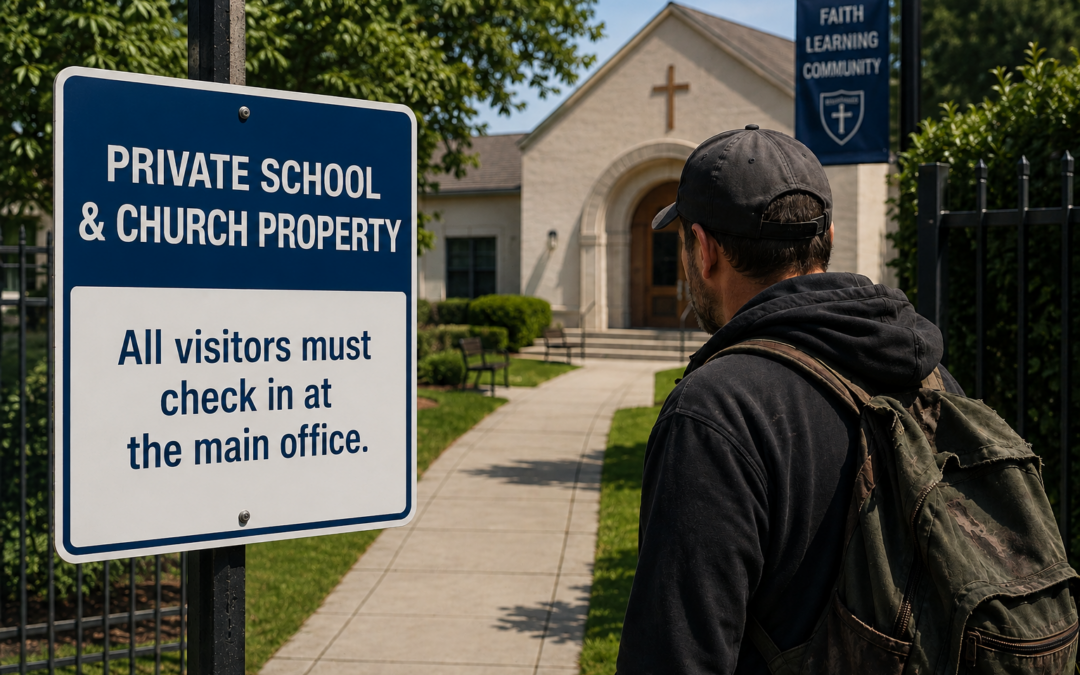
Registered Sex Offenders on California School Campuses: A Guide for Private Religious Schools
Imagine you are the administrator of a private religious...


Workplace violence is a growing concern across all sectors, and faith-based organizations are not immune. Whether you serve in a church office, preschool, or K-12 school, understanding and recognizing the warning signs of workplace violence is critical to maintaining a safe, compassionate environment for staff, volunteers, and congregants alike.
Workplace violence includes any act or threat of physical violence, harassment, intimidation, or other threatening behavior that occurs at a work site. It can range from verbal abuse and bullying to physical assaults or even acts of extreme aggression as serious as homicide. In any setting, these behaviors may come from co-workers, supervisors, volunteers, congregants, visitors, individuals served by the ministry, or even the employee’s own family members. In fact, a 2019 study by the Bureau of Labor Statistics (BLS) identified 27% of workplace violence incidents as related to domestic disputes.
Common forms include:
In a faith context, these behaviors can be especially challenging to recognize because they often conflict with an organization’s culture of grace, forgiveness, and relational harmony.
Faith-based organizations often emphasize openness, hospitality, and compassion—values that can inadvertently create vulnerabilities if boundaries are unclear. Additional risk factors include:
Recognizing these vulnerabilities allows leaders to build policies that reflect both safety and ministry values.
Workplace violence is an issue that transcends industries — and houses of worship are certainly not exempt. In fact, evidence suggests the risk may be growing. According to the Family Research Council, there were at least 436 acts of hostility against U.S. churches in 2023, more than double the number reported in 2022. The Bureau of Labor Statistics recorded 740 fatalities due to violent acts in the workplace in 2023. While not all these incidents occur between employees, they underscore an important reality: faith-based environments face unique exposure to interpersonal and public safety threats.
Most incidents of workplace violence are preceded by behavioral warning signs, and they may not always be plainly obvious. Awareness and early intervention are key.
Behavioral Indicators
Environmental Indicators
Leaders and supervisors should encourage a “see something, say something” culture—where safety concerns are voiced early and addressed promptly without fear of dismissiveness or retaliation.
Faith-based organizations can model how compassion and accountability co-exist. Key steps include:
Organizations that implement structured policies and training, such as harassment prevention training, are better equipped to prevent and respond to workplace incidents.
When addressed proactively, these measures not only reduce risks but also reinforce the organization’s commitment to care for all people—spiritually, emotionally, and physically.
If a violent or threatening situation occurs:
Faith-based organizations must plan and train proactively, not reactively. Develop a WVPP specific to your workplace and train on it. Training is intended to develop healthy awareness, not unhealthy paranoia. Preparedness transforms fear into confidence—knowing your team is equipped to respond calmly and effectively.
Many churches and ministries benefit from structured HR support to build policies, train teams, and strengthen workplace safety.
The goal of your training should be to empower ministries to recognize risks, document incidents, and build a culture where compassion and security work hand-in-hand to prevent, respond to, or mitigate risk exposures to keep people safe. Because when the time to perform has come, the time to prepare has passed.
# # # #
1. What is considered workplace violence in a faith-based organization?
Workplace violence in faith-based organizations includes any act or threat of physical harm, intimidation, harassment, or disruptive behavior involving staff, volunteers, congregants, students, or visitors. These incidents can range from verbal threats to physical aggression and should be addressed through clear policies and training.
2. Why are faith-based organizations at risk for workplace violence?
Faith-based organizations often operate with open access, high levels of trust, and emotionally sensitive environments, which can increase vulnerability. These risks are especially common in organizations that rely heavily on volunteers or serve individuals experiencing stress, trauma, or crisis, particularly among churches and ministries.
3. What are the early warning signs of workplace violence?
Early warning signs may include sudden behavioral changes, increased conflict, expressions of anger or resentment, threats, or signs of hostility within teams. Recognizing these signs early allows leaders to intervene before situations escalate.
4. How can faith-based organizations prevent workplace violence?
Prevention starts with clear policies, staff and volunteer training, and a culture that encourages reporting concerns. Many organizations implement structured programs like harassment prevention training to help teams recognize and respond to concerning behavior, along with broader church safety compliance planning.
5. What should a faith-based organization do after a workplace violence incident?
After an incident, organizations should prioritize safety, document what occurred, support affected individuals, and review their policies and procedures. Conducting a church HR audit can help identify gaps and strengthen future prevention efforts.
Imagine you are the administrator of a private religious...

The Family Preparedness Act of 2025: New Emergency and Safety...

An Overview of California SB 848 Requirements for Private...